.svg)
.svg)

Have you ever wondered why the music in your favorite movie or Netflix shows hits so differently?
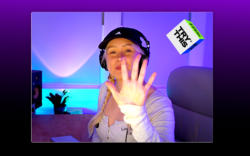
Above, expert film composer and educator Dave Kropf joined us on the Splice YouTube channel to showcase how he uses cinematic effects to score tension cues. Watch along to see how he builds momentum in an in-progress cue that embodies the spirit of his compositions for shows like Chopped, The Bachelor, Love is Blind, and Detective Diaries, and read highlights below.
Creating tension, suspense, and release: 6 tips and techniques
1. Start by asking what the cue needs energetically
Before reaching for any cinematic effect, Kropf asks himself a simple question: What type of energetic development is needed in the specific moment of the cue? This breaks down into several categories:
- Rising energy: Sweeps, reverses, and risers
- Falling energy: Downers and sub drops
- A bit of both: Whooshes and whips
- Accenting an arrival point: Impacts and sonic booms
2. Organize your effects into Collections
As you search for sounds, Kropf recommends using Collections to keep your favorite Splice samples organized by effect type (whooshes, sweeps, risers, etc.) so you can move quickly when you’re working in a cue. Having everything pre-sorted means less time hunting and more time composing.
3. Mark arrival points and chord changes
At the downbeat of each new phrase—especially where a meaningful chord change or new section lands—Kropf reinforces the moment with a boom. Every boom doesn’t need to be massive; in many contexts, something subtle can actually be more effective.
4. Build energy with layered effects
All of these different cinematic effects types don’t need to be used in isolation. For example, as he approaches a breakdown, Kropf layers a downbeat boom with a sweep leading into it, and then adds a cymbal swell, lining it up to the downbeat. The combination telegraphs clearly that something is about to change.
5. Pay close attention to the edit point(s)
Most tension cues have an “edit point”—a moment where the energy floats briefly so that an editor can drop in dialogue or a reaction shot. Elements like a reverse leading into a downer, with an impact on the downbeat, are a natural fit here.
6. Manage your low end
Layering multiple impacts and booms can create a lot of buildup in the low end of your mix. After arranging, Kropf uses EQ to clean things up, and will also sidechain particular elements like kicks with sonic booms. In combination with a mastering pass (Kropf uses iZotope’s Ozone), this takes a cue from a rough arrangement to a finished, placeable piece.
And there you have it! What was your favorite tip on creating tension, suspense, and release from Kropf? What other topics would you like to see us cover next? Let us know in the comments section of the video, and subscribe for more artist-led tutorials and breakdowns.
Dive into cinematic effects crafted by expert sound designers on Splice Sounds:
April 30, 2026