.svg)
.svg)

It would be hard to watch nearly any episode of reality TV without hearing a dramedy cue.
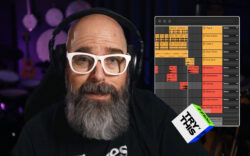
These sneaky, playful, quirky tracks sound like they fit right between suspense and comedy. In the tutorial video above, expert film composer and educator Dave Kropf showcases how to compose a dramedy cue from the ground up, using only sounds from Splice Sounds and Splice INSTRUMENT. Watch along to learn how to write a dramedy cue that fits right at home in any cooking, dating, renovation, or lifestyle show, and read highlights below.
1. Gather sounds for your dramedy cue
The reigning champion of dramedy music is pizzicato strings—violins, violas, cellos, and basses that are plucked instead of bowed. Mallet instruments—pitched percussion like marimbas, vibraphones, glockenspiels, and xylophones—also work really well for writing dramedy cues, as do keyboard instruments like pianos, clavinets, Wurlitzers, and electric pianos.
Other sounds that are commonly used include acoustic and electric guitars—maybe with wah or a whammy bar for some added playfulness. Depending on the rest of your sound selection, you can explore a wide variety of options for writing basslines—electric basses, keys basses, synth basses, or if you’re pushing into hip hop territory, even some 808s can be effective. Just be careful not to overdo it; you’re writing an underscore piece, not a contemporary beat.
On the note of hip hop, sprinkling in its characteristic elements into the percussion like trap snares, hats, little kick patterns, or even breakbeats can create small moments of intrigue that editors appreciate. Finally, you can add other percussion like shakers, cymbals, congas, and bongos, or effects like whooshes and risers.
2. Build the cue
There’s no universal tempo for dramedy cues, but generally you don’t want anything that’s too slow or too fast—around 90 BPM can be a good place to start. When you’re writing your melodies, leaving a lot of space between notes can help create that balance between tension and comedy. This also helps create room for other parts and accents to sneak in between as you develop your cue.
For drums, layering multiple loops can give you interesting grooves that are easy to vary and combine in unique ways. If you take this approach, make sure to monitor the low end and EQ it out in individual layers as necessary to avoid muddiness in your mix.
3. Establish the arrangement
It’s common for dramedy cues to take a subtractive arrangement approach, where a single stack of sounds is repeated throughout the entire duration of the cue, and then different parts are removed in each section to carve out the form.
In the tutorial example, the cue takes on an ABA form—the initial A section contains the hook, and energy is steadily built by introducing new layers every four bars. At roughly the halfway point, the hook drops out into a breakdown, and then builds again before reintroducing the hook and pushing to a final held tonic chord at the end. Modulating up by a half step adds extra energy when the chord progression is hanging on one chord.
Start writing your own dramedy music
And there you have it! While there are other processes to explore like mixing, mastering, and post-production, hopefully this guide gave you a solid foundation for writing your own dramedy music.
Which part of the tutorial was your favorite? What other topics in scoring for film and TV would you like to see us explore next? Let us know in the comments section of the video, and subscribe to the Splice YouTube channel for more expert-led tips, tutorials, and walkthroughs.
Explore royalty-free sounds from leading artists, producers, and sound designers:
June 25, 2026