.svg)
.svg)

What does it really take to turn an idea into a finished track, and then into a live performance?
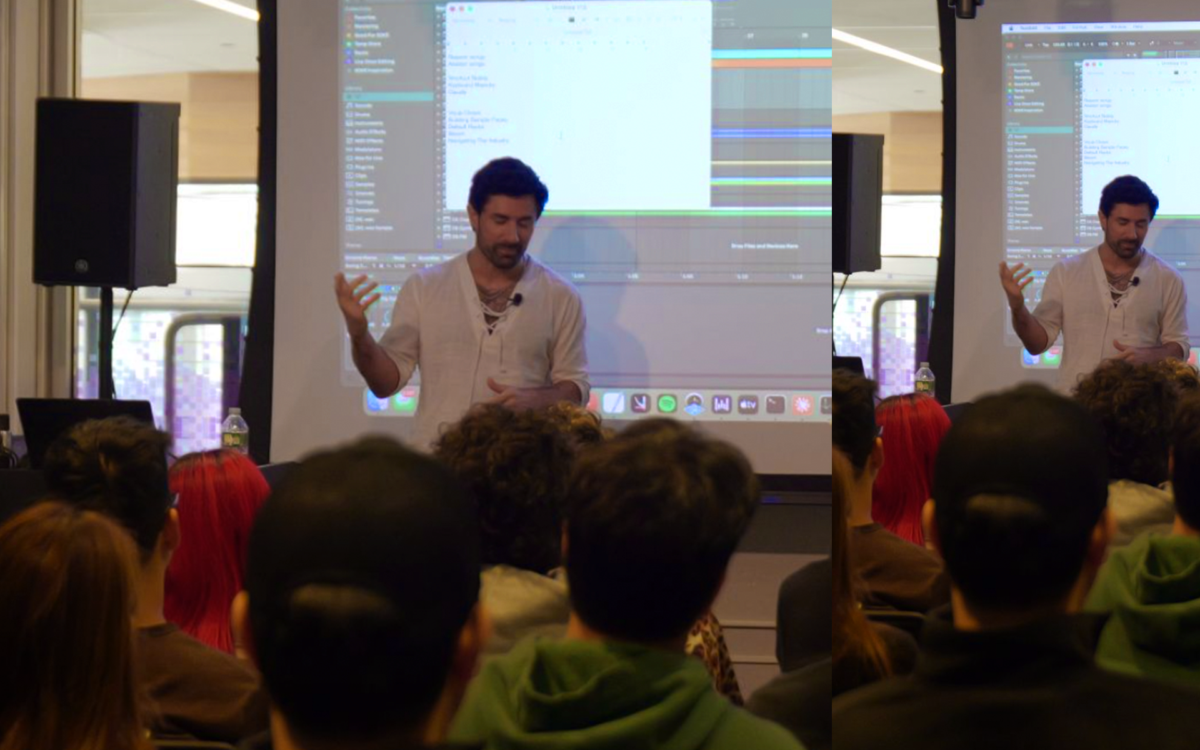
At Berklee College of Music, students got a firsthand look at that journey during a special Splice session with KSHMR. In this masterclass, he broke down his full creative process, from early experimentation to production workflows, sound design, and beyond.
Here are some of the biggest takeaways from the session.
1. Start simple and move fast
One of the most surprising insights was that some of KSHMR’s biggest records started with just a small handful of elements. He showed the students his early project files, where tracks were built from as few as four core sounds—kick, bass, melody, and a key texture—emphasizing that simplicity can be a strength, not a limitation.
Instead of overbuilding from the start, KSHMR focuses on getting the core idea down quickly, capturing energy in the moment, and expanding later only if needed. His speed often comes from real-world pressure, like collaborating in a room with other artists, which forces decisions and prevents overthinking.
2. Too many options can hurt creativity
Modern production tools offer endless possibilities—but this can also slow you down.
KSHMR talked about intentionally limiting complexity by printing ideas to audio stems, reducing track counts, and simplifying sessions to focus on big-picture decisions. Working with fewer elements makes it easier for him to experiment with structure and arrangement without getting lost in the details.
3. Build a world for every track
Rather than starting with sounds, KSHMR often starts with a feeling or a visual.
For example, one track might be inspired by cinematic storytelling, while another might be inspired by a specific cultural or emotional palette. Once that “world” is defined, every creative decision supports it.
As he described it, the goal is to stay faithful to that initial vision, using it as a filter for what belongs and what doesn’t. This approach strengthens cohesion and makes tracks feel more intentional.
4. Layer for emotion, not complexity
Another key production principle KSHMR shared was that contrast creates emotion.
Instead of stacking similar sounds, he focuses on combining fast vs. slow elements, rhythmic vs. sustained layers, mono vs. wide textures, etc. For example, pairing a rhythmic pattern with a sustained countermelody can dramatically increase emotional impact without adding clutter.
5. Use organic sounds as a shortcut to feeling
While synths are powerful, KSHMR emphasized the unique emotional quality of organic instruments.
Elements like flutes, vocals, and other live recordings naturally contain subtle variations, dynamic expression, and human imperfection. These details make it easier to create depth and emotion compared to purely synthetic sounds.
6. Treat your workflow like a product
One of the most forward-looking parts of the session was KSHMR’s approach to workflow. He shared how he builds custom tools to automate repetitive tasks and design systems that remove friction.
He emphasized that your creative environment matters. Small improvements in workflow can unlock major gains in output and consistency.
7. Make samples that actually work in context
When it comes to creating sounds (including sample packs), KSHMR’s advice was simple: don’t just make sounds—test them inside real tracks.
Instead of designing sounds in isolation, he recommends building full songs with them yourself, extracting usable elements, and ensuring every sound works musically. This ensures samples are practical, not just interesting on their own.
Explore KSHMR’s latest expansive collection of versatile drums, effects, and more.
8. Focus beats trends
When students asked about navigating today’s music industry, KSHMR’s perspective was clear:
- Don’t chase virality as a starting point
- Build something authentic first
- Let audience response guide refinement
He encouraged artists to pay attention to what resonates with listeners—and then lean into it—while still staying true to their identity.
9. Consistency beats everything
Last but not least, the recurring theme from his masterclass was discipline.
From his early days producing for classmates to building a global career, KSHMR’s edge came from high output and focused work habits. He emphasized that success often comes from doing the work consistently, especially when others aren’t.
Closing thoughts
The Berklee session was about mindset as much as it was about techniques. KSHMR emphasized that great music comes from clarity, consistency, and a willingness to experiment.
As one of Splice’s most impactful collaborators—whose sample packs have shaped workflows for producers around the world—KSHMR continues to embody these themes, both in the studio and in the tools he creates for the broader music community.
A huge thanks to Berklee and all the students who joined us, and to KSHMR for sharing such an in-depth look at his process.
Ready to bring these ideas to your classroom?
Explore our educational resources, including free lesson ideas and our Magic Link program to get your students started:
May 21, 2026