.svg)
.svg)

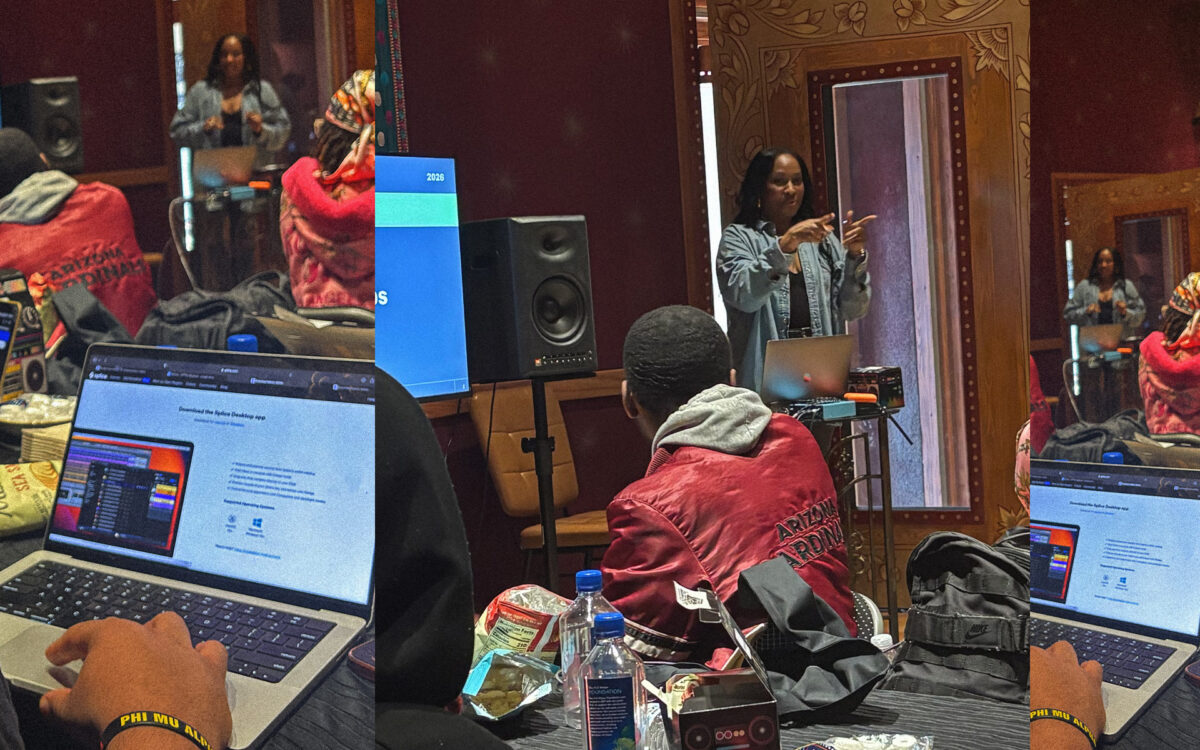
Recently, the Splice team traveled to Nashville to spend the day with students from Tennessee State University (TSU) as part of the Music Business Accelerator program, organized by the TSU Commercial Music program and the Black Music Action Coalition.
The session took place at the iconic East Iris Studios in Berry Hill—a legendary recording space that has hosted artists across genres and generations. But, while the studio’s history is impressive, the focus of the day was squarely on the future: how the next generation of music creators are learning, experimenting, and building their creative workflows.
At Splice, these moments matter. Our work in education is centered around one goal: meeting students where they are creatively and helping them understand the tools shaping modern music production.
Bringing industry workflows into the classroom
The session was led by Moya Nkruma, Senior Artist Marketing Manager at Splice, who walked students through how the company collaborates with artists and producers across the music ecosystem.
Moya shared how Splice partners with creators to develop content, tools, and creative resources that support real-world music workflows. From artist sample packs to collaborative writing camps and creator-led workshops, these partnerships are designed to amplify storytelling and inspire music creation.
Students also got a behind-the-scenes look at how artist collaborations translate into real products and experiences on the platform—connecting the creative process with the tools they use every day.
Along the way, Moya discussed a core principle behind Splice’s approach to emerging technologies: artists and creators must remain at the center of the creative ecosystem.
Exploring Splice tools and AI-powered workflows
After the discussion, students moved into a hands-on session where they explored several Splice tools used by producers around the world.
During the demo, students learned:
- The vast search capabilities of the Splice sounds library
- How to browse sounds directly inside their DAW of choice using the new Splice Sounds Plugin
- About the new Splice INSTRUMENT, a sample-based virtual instrument that allows producers to play presets directly inside their session
Staying in the creative flow using the DAW integrations and Splice Sounds Plugin allowed sounds to be auditioned and downloaded without leaving a project. The goal wasn’t just to demonstrate features; it was to help students understand how professional producers structure their creative workflows.
Creation time: Students put the tools to work
After the walkthrough, students were given time to experiment and start building their own ideas.
Working in breakout groups around the studio, students explored sounds, layered instruments, and began sketching out beats and ideas. The atmosphere quickly shifted from presentation to collaboration—exactly the type of creative energy that drives real studio sessions.
For many students, this was their first opportunity to explore how these tools can accelerate the early stages of music production.
What TSU had to say
“As an educator, I appreciate companies like Splice who expend extra time and effort to interact with our students,” says Dr. Mark Crawford, Professor of Music and Coordinator of Commercial Music at Tennessee State University. “Moya gave an informative demonstration that clearly showed the students how they can manifest the music they hear in their hearts and souls! Meredith was also helpful, as she interacted with the students, answered questions, and encouraged them to experiment with the app. Our time with Splice was very enlightening!”
Why experiences like this matter
Programs like the Music Business Accelerator are designed to bridge the gap between the classroom and the music industry—connecting students with the professionals, tools, and workflows shaping today’s creative landscape.
For Splice, participating in these moments is about more than demonstrating software. It’s about helping students understand how modern music is made, how creators collaborate, and how technology can support—not replace—human creativity.
By bringing industry tools and perspectives directly into educational spaces, we’re helping the next generation of creators see themselves as part of the creative ecosystem.
And sometimes, that journey begins in an iconic Nashville studio with a room full of curious students and a laptop full of sounds.
Ready to bring these ideas to your classroom?
Explore our educational resources, including free lesson ideas and our Magic Link program to get your students started:
May 12, 2026