Unmüte on French Touch & Musicality
We sat down with Julien Chapron from Unmüte to talk about French Touch inspirations and how he got into making samples.
Tell us about yourself — what led you to production and creating samples and synthesizer presets?
I actually started out with guitar when I was younger. That was my first real connection to music. A big part of my early influences came from my father. He was really into new wave, rock, and post-punk, so I grew up listening to bands like The Cure, The Police, New Order, and Depeche Mode. That shaped the way I hear melodies and atmospheres.
Later discovering electronic music, in particular the French Touch scene, I completely changed my perspective. Artists like Daft Punk, Justice, Cassius, Alan Braxe, and Modjo showed me that electronic music could feel both powerful and musical.
That’s what led me and my friend Ben to start The Noisy Freaks. It was a project rooted in electro, funk, rock, and French Touch influences, and it became a key phase where we developed our sound.
Over time, we shifted more toward sound design. Not just writing tracks, but shaping textures, harmonies, and movement. That naturally led me to create Unmute, while Benjamin now runs Tunecraft Sounds. We still collaborate regularly, especially on Serum presets and sound design projects.
For me, creating sample packs is simply another form of making music. Basically another way of sharing ideas and inspiration with other producers.

What inspired the sounds included in this Allure pack for Serum 2?
Allure was born from the intersection between classic French Touch aesthetics and modern nu-disco and electronic pop production.
We wanted presets that feel classy and immediately usable. There’s a strong influence from disco, funk, and French Touch in the harmonies, basslines, filtering, and groove, combined with a cleaner, more contemporary production approach.
A lot of the character comes from subtle movement; filter automation, saturation, sidechain motion, stereo depth, and macro-controlled modulation. Those elements were key but we also made sure to keep everything simple to use.
The priority was always musicality. A great preset should suggest an idea right away, not just sound impressive on its own.
We also aimed for a balance between nostalgia and modern production like vintage disco records meeting current club tracks.
How has Serum 2 changed the way you design sounds?
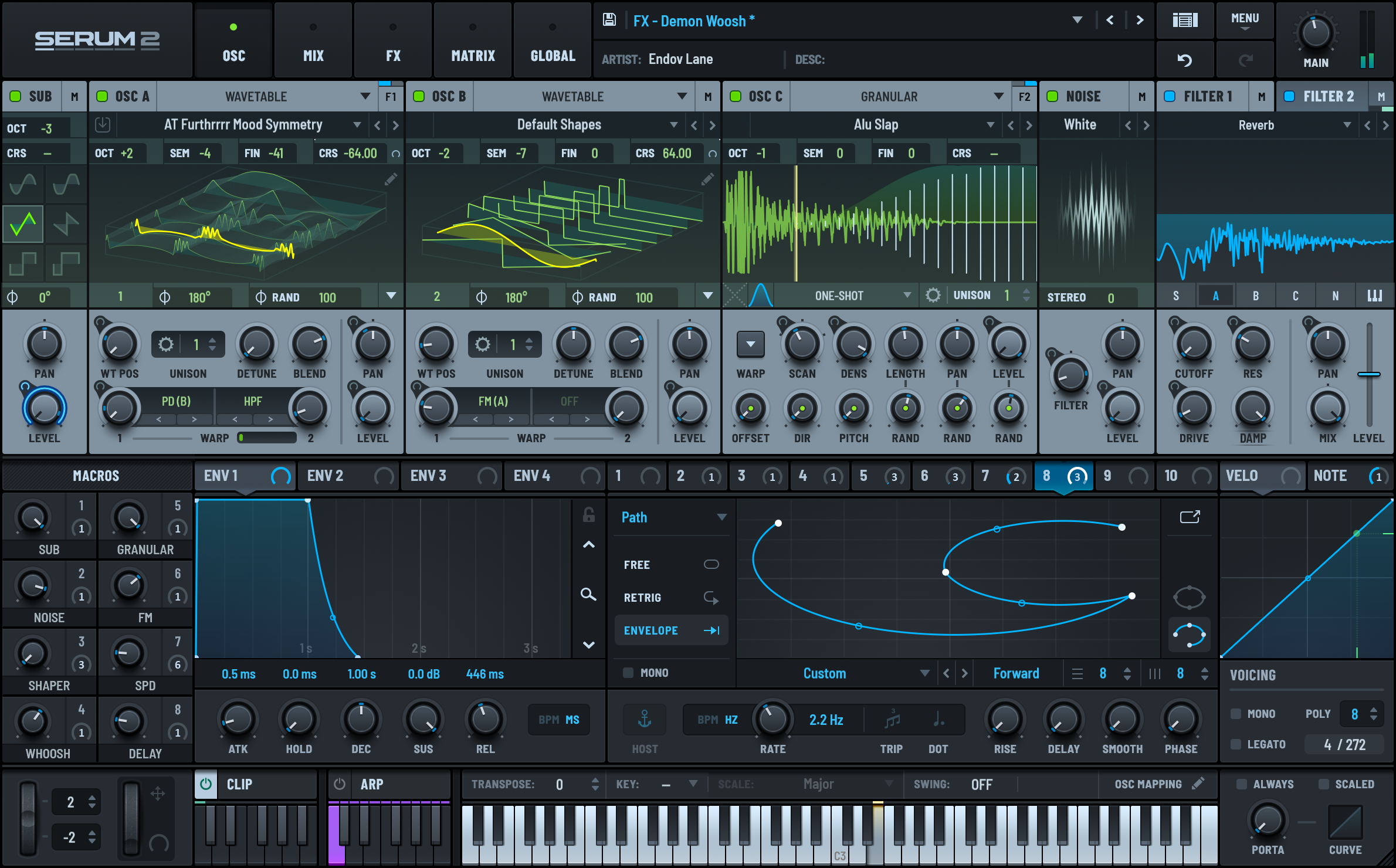
Serum 2 opened up new creative possibilities, especially in routing, modulation, multisample integration, and layering.
Many presets in Allure wouldn’t have been possible in Serum 1. The new engine allowed us to design sounds with more depth and variation while keeping them intuitive.
We were fortunate to be part of the Serum 2 beta program, which gave us early access to these tools and allowed us to push things further. It helped us move beyond previous limitations when designing more detailed presets.
We’d also like to thank Steve Duda and Matt for the opportunity and their trust.
What do you hope the Splice community will do with these presets?
We hope producers explore how the sounds are built and experiment with them. Sometimes small changes in modulation, filtering, or layering can completely transform a sound.
If the pack helps someone start a track they wouldn’t have made otherwise, that’s the best outcome for us.
Do you have any advice for musicians who want to move into sample or preset creation?
Focus on developing your own musical identity first. The best sample packs come from a clear artistic vision, not from following trends. Think like a producer when designing sounds. A preset should inspire ideas and fit naturally into a workflow.
Finally, understanding arrangement, mixing, and real production habits makes a big difference. The more you understand how tracks are built, the more useful your sounds will be.
