The Sound of America, In Spanish & The Evolution of Reggaeton
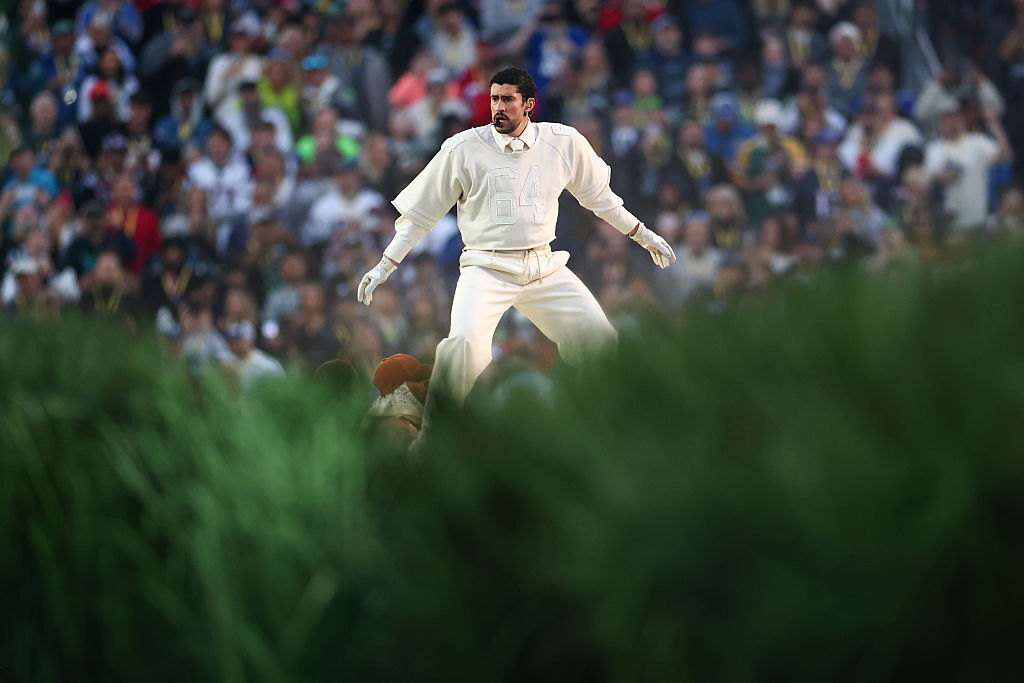
You probably didn’t see it at first. On the surface, when Bad Bunny took the halftime stage this past Sunday — fresh off his Grammy win just a week prior — it looked like a victory lap, a run through some of the massive catalog hits that turned him into a global star. But as the first Latino solo artist to headline the show, Bad Bunny wasn’t just making history. He was making a statement. Performed entirely in Spanish, and filled with cultural references rich with symbolism, the performance was a celebration of Latin culture and heritage — not as a guest in American culture, but as an essential part of it. And while the visuals were stunning, what lingered most was how deeply the performance made people feel. A profound sense of passion, pride and patriotism was felt with every movement in every frame. And beneath the visual presentation lived something just as meaningful musically. At the same time he was re-contextualizing what it means to be American, Bad Bunny was reframing reggaeton for the entire world to see.
Before Reggaeton Had a Name
Long before reggaeton was a global industry, it lived in translation. In the 1980s, Panamanian artists like El General and Nando Boom began reworking Jamaican dancehall into Spanish, giving rise to reggae en español. They didn't think of it as imitation, but rather it was adaptation. Caribbean rhythms filtered through local identity, language, and experience.
These early records laid the groundwork for what would come next: a sound built on movement, rhythm, and cultural exchange.
The Puerto Rican Underground
In the 1990s, reggaeton found its home in Puerto Rico’s underground. Producers like DJ Playero and DJ Nelson fused dancehall riddims with hip-hop drums and rap cadences, distributing music through bootleg cassettes and informal networks. The sound was raw, explicit, and deeply Afro-Caribbean — and it was often criminalized for exactly those reasons.
This era cemented the dembow rhythm as reggaeton’s backbone. More importantly, it established reggaeton as a form of resistance: music that existed whether it was sanctioned or not.
The Global Breakthrough
The early 2000s marked reggaeton’s first mainstream breakthrough. Tracks like Daddy Yankee’s Gasolina carried the sound far beyond the Caribbean, flooding radio stations, clubs, and eventually global charts. Artists like Don Omar and Wisin & Yandel helped formalize the genre, turning what was once underground into a commercial force.
But even as reggaeton exploded, it remained unmistakably rooted in rhythm. The dembow beat didn’t change — it traveled.
Pop, Polish, and Tension
By the 2010s, reggaeton had entered its pop era. Colombian artists and producers like J Balvin helped usher in a smoother, more melodic sound, opening the genre to broader audiences. Songs like Despacito made reggaeton unavoidable on a global scale.
This expansion came with tension. As the genre became more polished and international, questions emerged around whose voices were being amplified — and whose roots were being softened or erased. Reggaeton was bigger than ever, but its center of gravity was shifting.
The Modern Era: Weight Over Gloss
Today’s reggaeton exists in dialogue with its past. Artists like Bad Bunny have reintroduced darkness, experimentation, and emotional depth, blending traditional perreo with elements of Latin trap, alternative pop, and minimalist production.
This era isn’t about rejecting reggaeton’s mainstream success — it’s about reclaiming its weight. Space matters again. Mood matters again. The genre no longer needs to prove it can dominate charts; it’s focused on saying something.
The halftime performance wasn’t an exception. It was a culmination.
Reggaeton Oscuro
What Bad Bunny brought to the biggest stage in American entertainment was reggaeton informed by its entire history. From Caribbean roots to underground resistance to global visibility, every era was echoed and represented in the sound choices and the emotional pull of the performance. It was beautiful.
That same philosophy shapes Reggaeton Oscuro.
Created by producer Jorge Ulloa, the pack draws from reggaeton’s darker lineage — heavy drums, shadowed synths, and space-forward composition. With nearly 300 sounds including drum loops, one-shots, melodic elements, and songstarters, Reggaeton Oscuro is built for producers who understand that reggaeton doesn't stop at rhythm, but digs deeper to find its intention.
The evolution was never about getting louder. It was about going deeper.
Be sure to check out the Reggaeton Oscuro sample pack by Diaspora and our HOMAGE tribute collection to Bad Bunny.